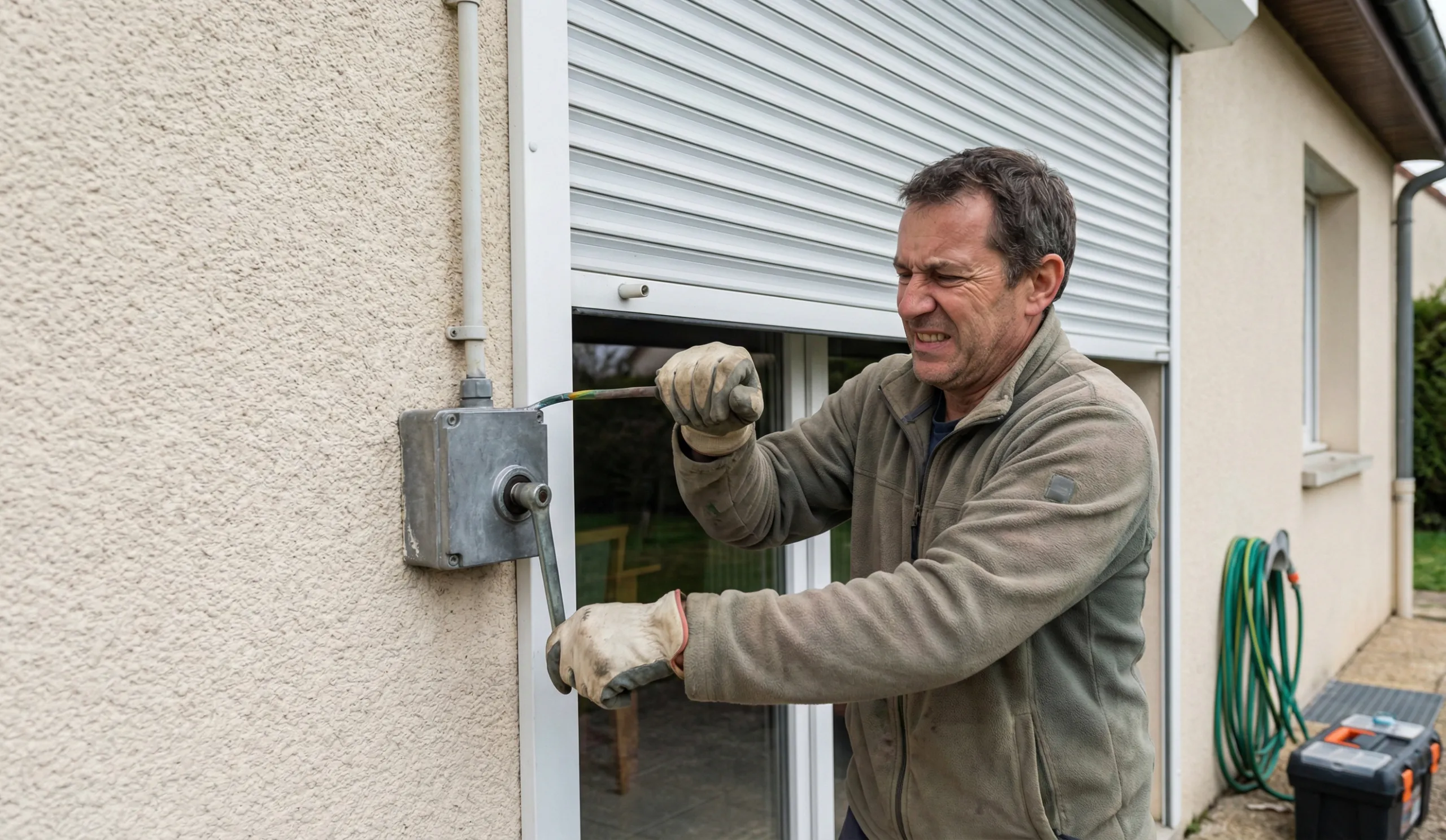
If your electric roller shutter won't open, you can usually operate it manually using the built-in override.
Power outages, motor failures, and remote control issues can all leave you staring at a closed shutter. It happens more often than you might think, especially during Sydney storm season when blackouts knock out entire streets.
This guide walks you through finding and using the manual override on your electric roller shutter. We cover the most common override types, what tools you need, and when to stop and call a professional instead.
Need help right now? Fix My Shutters offers fast roller shutter repairs across Sydney. If your shutter is stuck and you are not comfortable working with the mechanism, call us for a free assessment.
Before getting into the electric override process, it helps to understand how a manual roller shutter works. Manual shutters are still fitted on plenty of homes and shopfronts across Sydney, and the basic mechanism behind them is the same one that electric shutters build on.
A manual roller shutter is a covering made from interlocking aluminium or steel slats. The slats sit inside vertical guide rails on each side of the opening and roll around a central barrel housed in the pelmet box at the top.
Manual roller shutters use one of three systems to turn the barrel and raise the curtain:
| System | How It Works | Where You Will Find It |
|---|---|---|
| Strap winder | A woven strap wraps around a spool on the wall. Pulling the strap rotates the barrel via a pulley, rolling the curtain up. Releasing the strap lets the curtain lower under its own weight. | Residential windows, lighter shutters |
| Crank handle | A removable or fixed winding handle connects to the barrel through a geared mechanism. Turning the handle raises or lowers the curtain with less physical effort. | Heavier residential and commercial shutters |
| Spring-assisted lift | Counterbalance springs inside the barrel carry most of the curtain's weight. You lift the bottom rail by hand and the springs do the heavy lifting. A lock or latch holds the shutter at the height you choose. | Garages, shopfronts, lighter security shutters |
The counterbalance springs are what separate a smooth lift from a dead-weight struggle. When the spring tension is set correctly, the curtain should feel nearly weightless at any height. If yours has become harder to lift over time, the springs likely need adjustment or replacement.
Electric shutters swap the manual winding for a tubular motor fitted inside the barrel. The override systems covered below let you bypass that motor when it stops working, essentially reverting an electric shutter to manual operation. If you are weighing up whether to keep a manual shutter or upgrade, our guide to converting a manual roller shutter to electric covers what the job involves.
Electric roller shutters rely on a motorised system to raise and lower the curtain. When the power goes out or the motor fails, that system stops working entirely. The shutter stays wherever it was when the power cut happened.
Power outages are only one reason. Motor burnout, a tripped circuit breaker, a faulty remote receiver, or damaged wiring can all produce the same result.
Before you touch the manual override, check your switchboard first. A tripped breaker is a two-second fix that saves you pulling apart the pelmet.
Most electric roller shutters sold in Australia include a manual override as standard. The type depends on the manufacturer and the age of the installation.
| Override Type | How It Works | Common On |
|---|---|---|
| Crank handle | Insert into a socket on the motor end and wind by hand | Older tubular motors, B&D, Ozroll |
| Chain loop | Pull a chain loop hanging inside the pelmet to raise or lower | Mid-range domestic shutters |
| Emergency release cord | Pull a cord to disengage the motor, then lift manually | Newer Somfy and similar motors |
| Hex key override | Insert a hex key into the motor shaft and turn | Commercial and heavy-duty shutters |
If you do not know which type you have, open the pelmet cover and look at the motor end of the barrel. The override mechanism is almost always on the same side as the motor.
You probably already own everything you need. The challenge is finding the crank handle, because most people lose it within a year of installation.
If you have lost the crank handle, contact the manufacturer or a roller shutter repair specialist for a replacement. Using the wrong tool can strip the override socket.
Follow these steps carefully. If anything feels stuck or wrong at any point, stop. Forcing a jammed mechanism can bend the barrel or strip the override socket, turning a simple fix into an expensive repair.
Switch off the circuit breaker for the shutter. This prevents the motor from activating while you are working on the override. Even if the power is already out, switch the breaker off so it does not kick back on mid-operation.
Use a Phillips head screwdriver to remove the screws along the bottom edge of the pelmet. Carefully lower the cover to expose the barrel and motor assembly. Set the screws somewhere safe.
Look at the motor end of the barrel. You should see one of the override types described above. For crank handles, there will be a small square or hexagonal socket.
For chain systems, you will see a chain loop hanging from a sprocket on the motor.
Once the shutter is open, lock the bottom rail using the manual lock if your shutter has one. If there is no lock, the shutter should stay in place under its own weight, but keep an eye on it.
Important: Manual operation is a temporary fix. If the motor has failed, the shutter will not hold position reliably. Get the motor checked by a professional before relying on the shutter for security.
Not all shutters can be opened from outside. External access would be a security risk on most residential installations, but some shutters include an external key release for emergencies.
If you need external access regularly (on a shopfront or garage), ask your installer about retrofitting a key release system.
Once the power is back or the motor issue is resolved, switch the shutter back to electric operation. Leaving the override engaged can damage the motor when power is restored.
If the shutter does not respond after re-engaging, the motor itself may need repair. Do not keep toggling the switch, as this can overload a faulty motor. Contact a roller shutter repair technician for diagnosis.
We see the same mistakes every week at Fix My Shutters. Most of them turn a $150 repair into an $800 one. Avoid these.
The override system is designed for occasional emergency use. If you find yourself using it regularly, that is a sign the motor or electrical system needs repair.
DIY manual override works well for simple power outages. But some situations need a qualified technician with the right parts and diagnostic tools. Do not push beyond what is safe.
Fix My Shutters has over 15 years of experience repairing electric roller shutters across Sydney. We carry common replacement motors and parts on every job, so most repairs are completed in a single visit. Get in touch for a free assessment.
A bit of preparation means you will never be caught out. These are simple things you can do now that pay off when the power goes out at 2am.
Lubricating the override mechanism annually also helps. A light silicone spray on the crank socket or chain sprocket keeps things moving freely. For a full roller shutter maintenance checklist, we have a separate guide.
The NSW Fair Trading building guidelines recommend regular maintenance on all motorised window and door fittings.
If you are in Parramatta, Penrith, or anywhere across Sydney, annual servicing keeps your shutters running and your override mechanism ready when you need it.
A manual roller shutter uses interlocking aluminium or steel slats that roll around a barrel inside the pelmet box. You raise and lower the curtain using a strap winder, crank handle, or spring-assisted lift. Counterbalance springs inside the barrel offset the curtain's weight so the shutter feels light to operate by hand.
Yes. Most electric roller shutters sold in Australia include a manual override that works without power. You use a crank handle, chain loop, or emergency release cord to raise the shutter by hand.
The manual override is located inside the pelmet (the box housing at the top of the shutter). It sits on the same end as the motor. Remove the pelmet cover screws to access it.
Some older or budget shutters were installed without one. You cannot safely open the shutter yourself without risking damage. Contact a roller shutter technician who can fit a retrofit override or manually release the barrel.
Lower the shutter to its resting position, remove the crank handle or release the chain, replace the pelmet cover, and switch the circuit breaker back on. If the motor does not respond to the remote or wall switch, it may need professional repair.
It is safe for most residential shutters if you follow the correct steps. Always disconnect the power at the switchboard first, use the correct override tool, and stop immediately if anything feels jammed or you hear grinding. Heavier commercial shutters should be left to a professional. The SafeWork NSW electrical safety guidelines recommend switching off the circuit before working near any motorised fitting.
Only if the shutter has an external key release system fitted. Most residential shutters do not include external access for security reasons. Commercial shutters and shopfronts are more likely to have one.
A counterbalance spring is a coiled spring fitted inside the barrel that offsets the weight of the shutter curtain. It is what makes a manual shutter feel light to lift instead of like dead weight. When the spring tension is correctly set, the curtain should hold at any height. Springs wear over time and may need tension adjustment or replacement.
Most electric shutters manufactured in Australia since the early 2000s include one. Older or budget installations may not. If your shutter has no override and the motor fails, a technician can release the barrel manually or fit a retrofit override for future use.
Manually opening an electric roller shutter is straightforward when you have the right tool and know where to find the override. But manual operation is a stopgap, not a solution.
If your motor has failed or the override is not working, call Fix My Shutters on 0452 536 233 for a free assessment. With 15+ years of experience and same-day emergency service, we repair electric roller shutters across Sydney.
Whether you are in Penrith, Blacktown, Liverpool, St Marys, Parramatta or Merrylands, we can usually have a technician on site within 24 hours. Visit our Sydney roller shutter repair page for full details, or contact us directly for a quote.
Related guides: How to Set Limits on a Roller Shutter · How to Open a Roller Shutter Without Electricity
