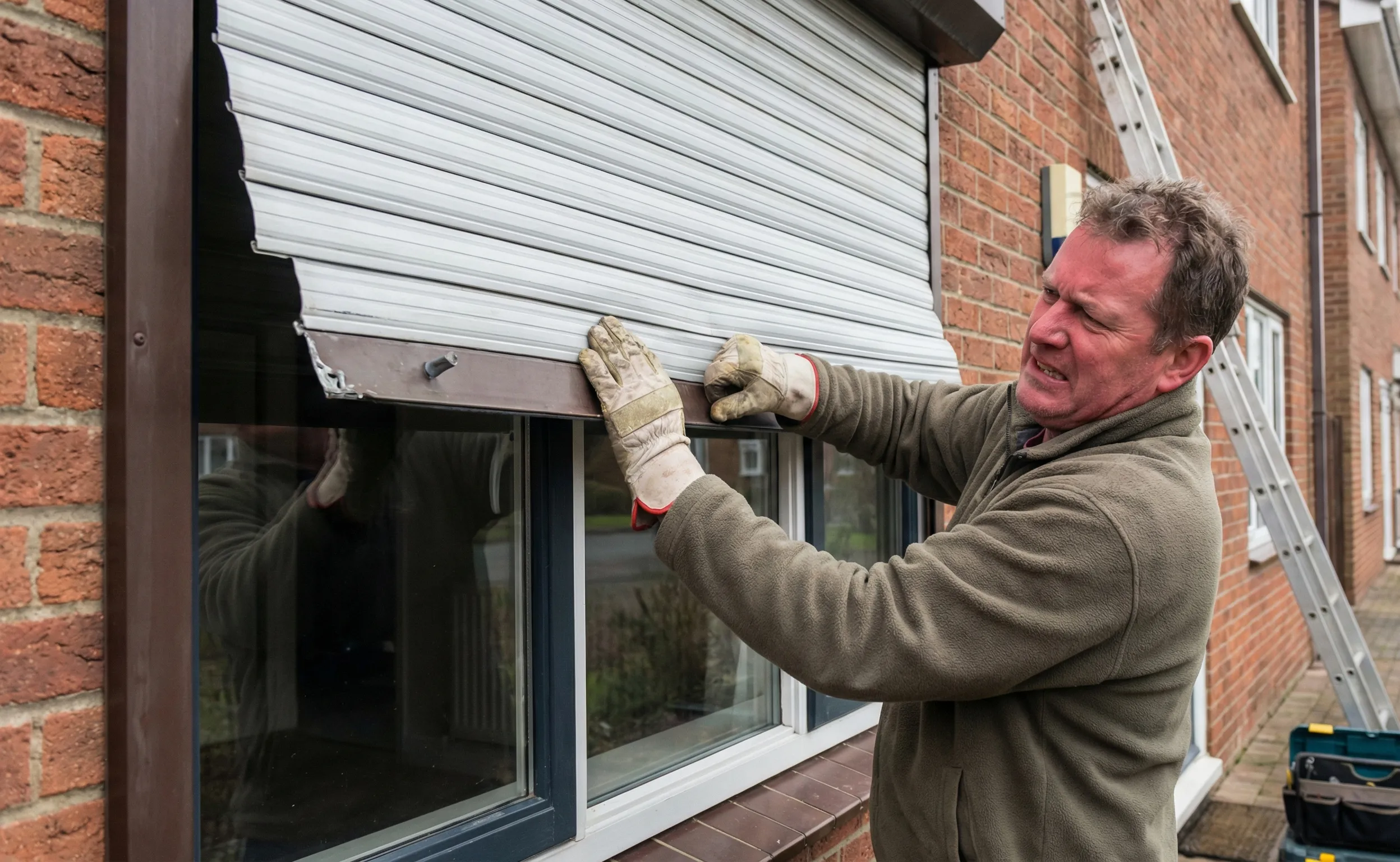
A roller shutter that won't go up is usually caused by a power fault, motor issue, or blocked tracks.
You press the button or pull the strap and nothing happens. Or it moves a few centimetres and stops. Maybe it makes a humming sound but stays put. If that sounds familiar, you're dealing with one of the most common roller shutter faults in Australian homes.
Most causes are identifiable without pulling anything apart. Some you can fix yourself in minutes. Others need a qualified technician, but at least you'll know what you're dealing with before you make the call.
It sounds obvious, but power problems account for a large share of "broken" manual and electric roller shutters alike. Electric shutters draw from a dedicated circuit or a nearby power point, and if that supply is interrupted, the shutter simply won't respond.
Run through these checks before anything else:
If there's no power at all and you need immediate access, you can open a roller shutter without electricity using the manual override. Power outages can also reset the shutter's internal limit settings, which is a separate problem covered below.
Before troubleshooting anything electrical or mechanical, check the lock. Many roller shutters have a keyed lock, thumb-turn latch, or pin lock at the bottom rail. If the lock is engaged, the shutter physically cannot move up.
This catches people out more often than you'd expect, especially on shutters with built-in end locks that aren't immediately visible. If you have a keyed lock and can't find the key, a technician can remove or replace the lock cylinder without damaging the shutter.
Electric roller shutter motors have a built-in thermal fuse. If the motor gets too hot from repeated use or sustained operation, the fuse trips and shuts it down. This is a safety feature, not a fault.
You'll notice this most often if you've been opening and closing the shutter multiple times in a short period, or if the shutter was running against resistance and the motor had to work harder than normal.
Quick diagnostic: If the motor hums but the shutter doesn't move, that points to a mechanical jam or seized bearing. Stop pressing the button immediately to avoid burning out the motor. If there's no sound at all, the problem is more likely electrical.
What to do: Stop using the shutter and wait 20 to 30 minutes. The thermal fuse resets on its own once the motor cools. If it works again after waiting, the motor itself is fine. If it keeps tripping, there's an underlying cause.
If the motor keeps overheating or has stopped responding entirely, check for signs your roller shutter motor needs repair before calling a technician.
Roller shutters run along guide rails on both sides of the opening. If anything gets lodged in those rails, the shutter can jam partway through its travel or refuse to move at all.
Common things that block the tracks:
Inspect both guide rails from top to bottom. Use a torch if the area is shaded. Remove any visible debris by hand or with a soft brush. For grit and grime, wipe the rails with a damp cloth and apply a silicone-based lubricant. For the right products and technique, see our guide on how to lubricate roller shutters the right way.
Automated roller shutters use limit switches to know where "fully open" and "fully closed" are. These are programmed positions. When the power cuts out unexpectedly, some motors lose those stored positions.
The result: the shutter stops responding, or it moves a tiny amount and then halts because it thinks it's already reached its limit.
Resetting limit switches varies by motor brand. Some have a reset button on the motor head itself. Others need reprogramming through a wall switch sequence. For a step-by-step walkthrough, see our guide on how to set limits on a roller shutter. If you don't have the manual, the Somfy and similar manufacturer websites often have downloadable copies.
Warning: Getting limit switch programming wrong can cause the shutter to slam into the ground or try to roll past the barrel. If you're not confident with the process, call a technician. A botched reset can damage the motor, slats, and guide rails all at once.
Not all roller shutters are electric. Manual shutters use a strap, crank winder, or spring mechanism to operate. When a manual shutter won't go up, the problem is almost always mechanical.
| Symptom | Likely Cause | Can You Fix It? |
|---|---|---|
| Strap pulls freely with no resistance | Broken strap coil or disconnected spring | No. Needs professional repair. |
| Winder handle spins but shutter stays put | Worn gear mechanism inside the winder box | No. The winder unit needs replacing. |
| Shutter lifts slightly then drops back | Weak or broken counterbalance spring | No. Springs are under tension and dangerous. |
| Strap is frayed or snapped | Wear and tear on the webbing | Sometimes. Replacement straps are available at hardware stores. |
| Shutter feels very heavy to lift | Spring tension has weakened over time | No. Spring retensioning requires specialist tools. |
Spring mechanisms deserve extra caution. They're wound under significant tension and can cause serious injury if released incorrectly. The Safe Work Australia guidelines on stored energy hazards apply here. Leave spring work to a qualified repairer.
That depends on where it's stuck and what it's protecting. A shutter jammed shut on a bedroom window is annoying but not an emergency. A shutter stuck open on a ground-floor shopfront is a different story.
If your shutter is stuck in a position that compromises security, don't leave it overnight. Contact Fix My Shutters for a fast-response repair across the Sydney metro area.
When you call a roller shutter technician, here's what to expect. A standard diagnostic visit usually takes 30 to 60 minutes depending on the fault.
Many faults are fixed on the spot in a single visit. Motor replacements and spring retensioning may take longer if parts need to be ordered.
Fix My Shutters carries common parts on the van, so most repairs across Sydney are completed the same day. With 15+ years of experience, we've seen every type of shutter fault going.
A humming motor usually means something is physically preventing the shutter from moving. Common causes include a jammed slat, debris in the tracks, or a seized bearing. Stop pressing the button and call a technician. Running a stalled motor can burn it out.
Power outages can reset the motor's programmed limit positions. When the shutter loses its "fully open" and "fully closed" settings, it may refuse to move or travel only a few centimetres. You'll need to reset the roller shutter motor and reprogram the limits.
It depends on the cause. Track debris you can clear yourself, and replacement straps are available at hardware stores. But anything involving the motor, springs, or wiring should be left to a professional. Spring repairs in particular are genuinely dangerous without the right tools.
Yes. A ground-floor shutter stuck open leaves your window or door fully exposed. If the shutter is on a street-facing opening or a commercial premises, treat it as urgent and get it repaired the same day.
It varies by fault. A limit reset or track clean is a quick job. Roller shutter repair costs in Australia typically range from a minor callout fee for simple fixes to a few hundred dollars for motor or spring replacements.
If the shutter jams repeatedly after repair, the issue may be structural: warped guides, a failing motor, or slats beyond straightening. Understanding how long roller shutters last can help you decide. In many cases, replacing the shutter is more cost-effective than ongoing repairs.
A roller shutter that won't go up is frustrating, but it's rarely a mystery. Start with the power supply and the lock. Check for obstructions. Wait out a thermal trip if the motor ran hot. For anything mechanical or electrical beyond basic checks, a professional repair is the safest path.
If the opposite is happening, check our guides on roller shutters that won't close or roller shutters that won't stay down.
Don't force a stuck shutter. Pulling harder on a jammed strap or repeatedly hitting the button on an overheated motor turns a simple fix into an expensive replacement.
Contact Fix My Shutters for a fast, no-obligation assessment. We repair all brands of roller shutters across Sydney and can usually get to you the same day.
