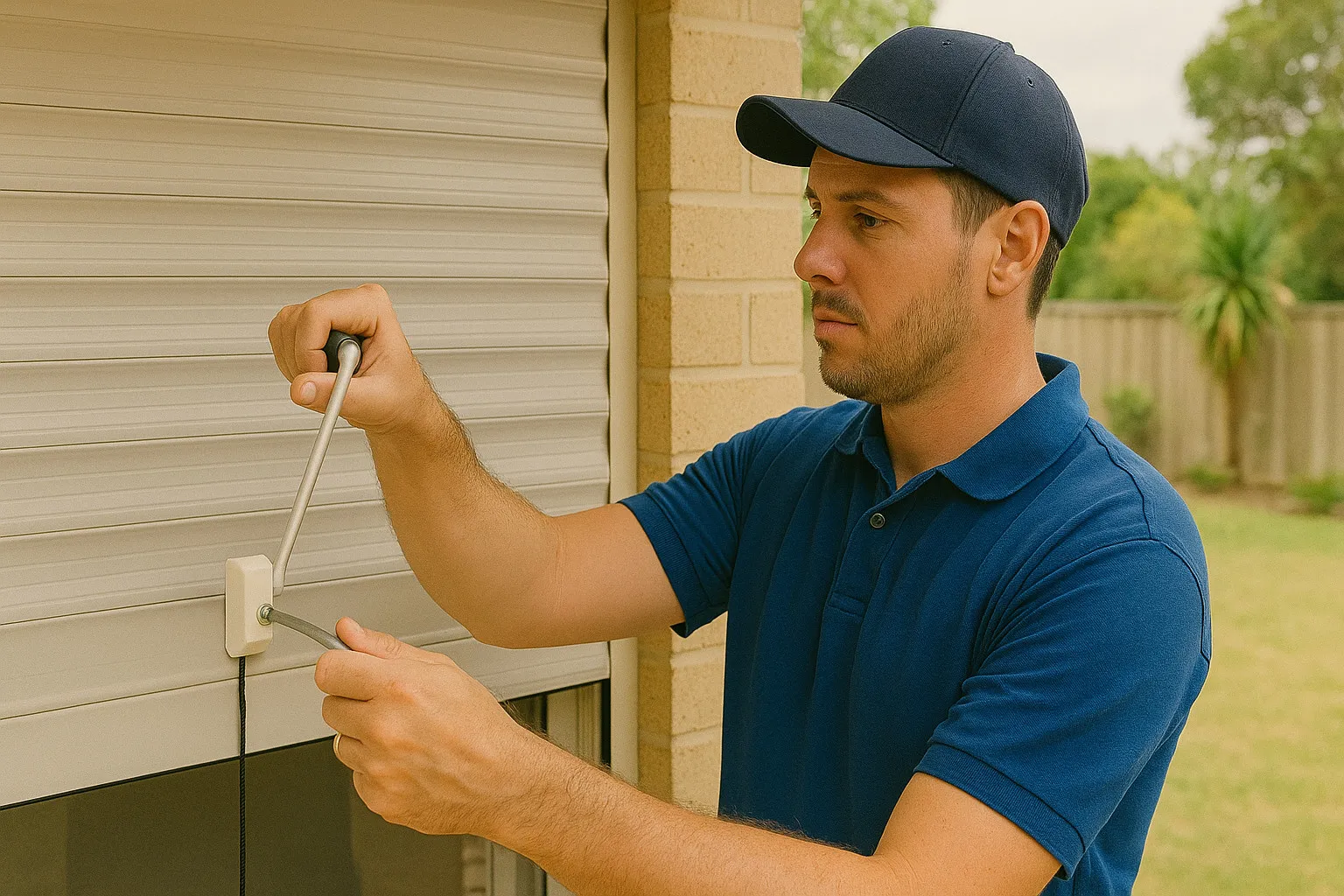
A working roller shutter manual override could be the difference between safety and being trapped during a blackout.
Electric roller shutters are a common feature on Sydney homes and businesses. They keep heat out in summer, add security at night, and block noise from busy roads.
But when the power drops or the motor fails, that convenience disappears fast. Your roller shutter manual override is the backup system that lets you raise or lower the shutter by hand.
Testing it takes about five minutes. Skipping it could mean hours of frustration during an actual shutter emergency. This guide covers everything you need to know: how the override works, how to test it properly, what faults to look for, and when to call in a specialist.
Every motorised roller shutter should have a manual override mechanism. It is a mechanical backup that bypasses the electric motor so you can operate the shutter by hand. Most residential shutters in Australia use one of three systems.
The override socket is typically at ground level or just above waist height on one side of the shutter. If you have never located yours, check the original installation paperwork or look for a small circular or hexagonal cap on the guide rail or pelmet housing.
If your shutter was installed without a manual override, or the mechanism has been removed, contact a qualified technician. Operating a shutter without the correct override can damage the motor or curtain.
The term "manual roller shutter" causes some confusion because it can mean two different things. A manual roller shutter is a shutter with no motor at all. You operate it entirely by hand, usually with a strap winder mounted inside the room, a spring-loaded mechanism, or an external crank built into the housing. These shutters are cheaper to install and have fewer parts that can fail, but they take more effort to use every day.
A manual override, on the other hand, is the backup system built into a motorised shutter. It only gets used when the power is out or the motor has failed. Both systems rely on the same basic mechanics (a crank or strap turning the shutter axle), but the components wear differently because one runs daily and the other sits idle for months at a time.
If you are weighing up whether to convert your manual roller shutter to electric, the override mechanism on the new motor will give you manual access when you need it without the daily winding. This guide focuses on the override system, but the testing and maintenance advice applies to fully manual shutters too.
Most people never touch the override until something goes wrong. By then, it is often seized, missing, or broken. Regular testing prevents three common problems.
Testing every three to six months catches these issues early. Including the override in your annual roller shutter safety checks ensures nothing gets missed.
At Fix My Shutters, we have seen hundreds of override failures across Sydney. Almost all of them could have been prevented with a quick test.
You do not need specialist equipment. Gather these items before you start.
Never attempt to test the manual override while the shutter is connected to power. Disconnect the power supply first to avoid the motor engaging unexpectedly.
Follow these steps in order. If anything feels wrong at any stage, stop and call a professional rather than forcing the mechanism.
Switch off the dedicated circuit at the wall or the breaker in your switchboard. This stops the motor from activating while you test. On commercial shutters with a key switch, turn it to the off position.
Find the override input point and remove any dust cap or cover. Wipe the socket with a rag and apply a small amount of lubricant around the opening. This reduces friction and helps the handle engage cleanly.
Slide the handle into the socket. You should feel it click or seat firmly against the internal drive. If it wobbles or does not engage, the socket or handle may be worn, so do not force it.
Turn the handle clockwise to raise the shutter (on most models). Go slowly and listen carefully. A smooth, consistent resistance is normal, but grinding, clicking, or sudden stiffness is not.
Once you have tested the override in both directions, remove the crank handle and replace any dust cap. If your shutter uses a release cord, push the cord clip back into the locked position until you hear or feel the clutch click. A firm click confirms the motor is reconnected to the drive shaft.
Before restoring power, double-check that all tools and handles have been removed from the override socket. A forgotten crank handle will spin when the motor activates.
Restore power at the circuit breaker and test the shutter using the remote or switch to confirm the motor operates correctly. Run one full open-close cycle to let the motor recalibrate its stopping positions. If it stops short or overruns, the motor limits may need resetting.
| Feature | Electric Operation | Manual Override |
|---|---|---|
| Power source | Mains electricity | Human effort (hand crank) |
| Speed | Full open/close in 15-30 seconds | 2-5 minutes depending on shutter size |
| Effort required | None (button or remote) | Moderate physical effort |
| Works during blackout | No | Yes |
| Wear on mechanism | Motor and electronic components | Override gears and clutch |
| Maintenance needed | Annual motor service | Test every 3-6 months, lubricate socket |
The override is not a replacement for a working motor. It is a safety fallback. If you find yourself relying on it regularly, the motor or electrical system needs attention.
After 15 years of repairing window roller shutters across Sydney, the team at Fix My Shutters has diagnosed just about every override fault there is. Here are the most frequent problems.
Any of these faults warrants a professional inspection. Forcing a stuck override can crack the housing, strip the gears, or bend the axle, turning a minor repair into a full replacement.
Occasionally the motor behaves differently after you use the manual override. These post-override issues are usually fixable without a technician.
If none of these steps resolve the issue, the motor or its internal gearing may have sustained damage during manual operation. A qualified technician should inspect the system before you use the shutter again.
If your roller shutter has no motor at all and runs purely on a strap winder, spring mechanism, or built-in crank, the failure points are different from those on a motorised override.
Check the strap condition and run a cloth along the guide rails at least twice a year. Catching a frayed strap early is a ten-minute fix; waiting until it snaps usually means a callout.
Some override issues are straightforward. A missing handle can be replaced and a dusty socket can be cleaned.
But several situations call for a qualified roller shutter technician.
The same applies to fully manual roller shutters. If the strap has snapped inside the wall cavity, the spring mechanism has broken, or the shutter is dropping on its own, a professional repair is safer and faster than working it out yourself. Rental property roller shutters are worth noting here too: tenants should report shutter faults to the landlord or property manager rather than attempting their own fix, since incorrect repairs can create liability issues.
Attempting DIY repairs on the internal mechanism risks voiding your warranty and can create safety hazards. Roller shutter springs and axles are under significant tension, so leave internal work to someone with the right tools and experience.
If you are anywhere in the Sydney metro area, get in touch with Fix My Shutters. With over 15 years of hands-on experience, we diagnose and fix override faults on the spot in most cases. You can also check our Google reviews to see what other Sydney customers have to say.
A few simple habits will keep your manual override reliable for years.
These small steps cost nothing but save real money in an emergency. A seized override often means an emergency callout, while a maintained one means five minutes of hand-cranking and no stress.
Your roller shutter manual override exists for one reason: to work when everything else fails. Testing it regularly is the simplest maintenance task you can do, and it is the one most people skip.
Set a reminder on your phone for every three months. Grab the handle, disconnect the power, and give it a few turns.
If anything feels off, do not force it. Call a professional and get it sorted before the next storm rolls through.
For override repairs, replacements, or a full shutter health check anywhere in Sydney, contact Fix My Shutters today.
Most motorised roller shutters installed in Australia include a manual override as standard. Some older or budget models may not. If yours is missing, a technician can assess whether a retrofit is possible for your motor type.
Use the manual override. Disconnect the power, locate your crank handle or release cord, and operate the shutter by hand. Our guide to opening a roller shutter without electricity covers the full process.
No, the override disengages the motor from the drive shaft, so turning the crank handle puts no load on the motor itself. Damage only occurs if you force a jammed mechanism or forget to remove the handle before restoring power. Gentle, steady operation protects both the override and the motor.
It depends on the shutter size and weight, but a standard residential window shutter takes moderate effort and about two to five minutes to fully raise. Larger shutters on double garages or commercial shopfronts are significantly heavier and may need two people. If a residential shutter feels unusually heavy, the spring tension may be too low, which makes manual operation much harder than it should be.
Check with the original installer or search for the make and model number on the motor housing. Most crank handles use universal hexagonal or square-drive fittings and can be ordered as replacement parts. If your shutter has a release cord you can operate it by hand without the crank, but otherwise a roller shutter technician can supply the correct handle on site.
In most cases, yes. If the motor supports an override attachment point, a technician can retrofit a crank handle socket or release cord mechanism. If the motor is too old or incompatible, replacing it with a modern unit that includes a built-in override is usually the more reliable option.
A manual roller shutter is a shutter that operates entirely by hand, with no electric motor. You raise and lower it using a strap winder, a built-in crank handle, or a spring-loaded mechanism. They are typically less expensive to install than motorised shutters and have no electrical components to fail, though they do require more physical effort to use every day. Our manual vs electric roller shutters guide covers the trade-offs in more detail.
Yes, most manual roller shutters can be retrofitted with a tubular motor. The motor replaces the manual winding mechanism inside the axle, and a new wall switch or remote control handles the operation. The conversion includes a manual override so you still have backup access without power. Our guide on converting a manual roller shutter to electric covers what is involved and what to expect.
Check the strap or crank mechanism for wear every six months. Fraying straps should be replaced before they snap. Lubricate the guide rails with silicone spray at least once a year and clear any dirt or debris from the tracks. If the shutter starts to feel heavy or stiff, the spring tension may need adjusting. Keeping on top of these basics extends the life of a manual roller shutter by years.
Many of the issues covered in this guide can be fixed at home if you have the right tools and a bit of patience. But if the problem is beyond a quick DIY repair, or you'd rather have it done properly the first time, we offer fast roller shutter repairs anywhere in Sydney. With 15+ years of experience and same-day emergency service, we've fixed every type of roller shutter problem across the city.
Whether you're in Penrith, Blacktown, Parramatta or Merrylands, we can usually have a technician on site within 24 hours. Visit our Sydney roller shutter repair page for full details on the suburbs we service, or request a free assessment.
Related guides: How to Open an Electric Roller Shutter Manually · How to Set Limits on a Roller Shutter
