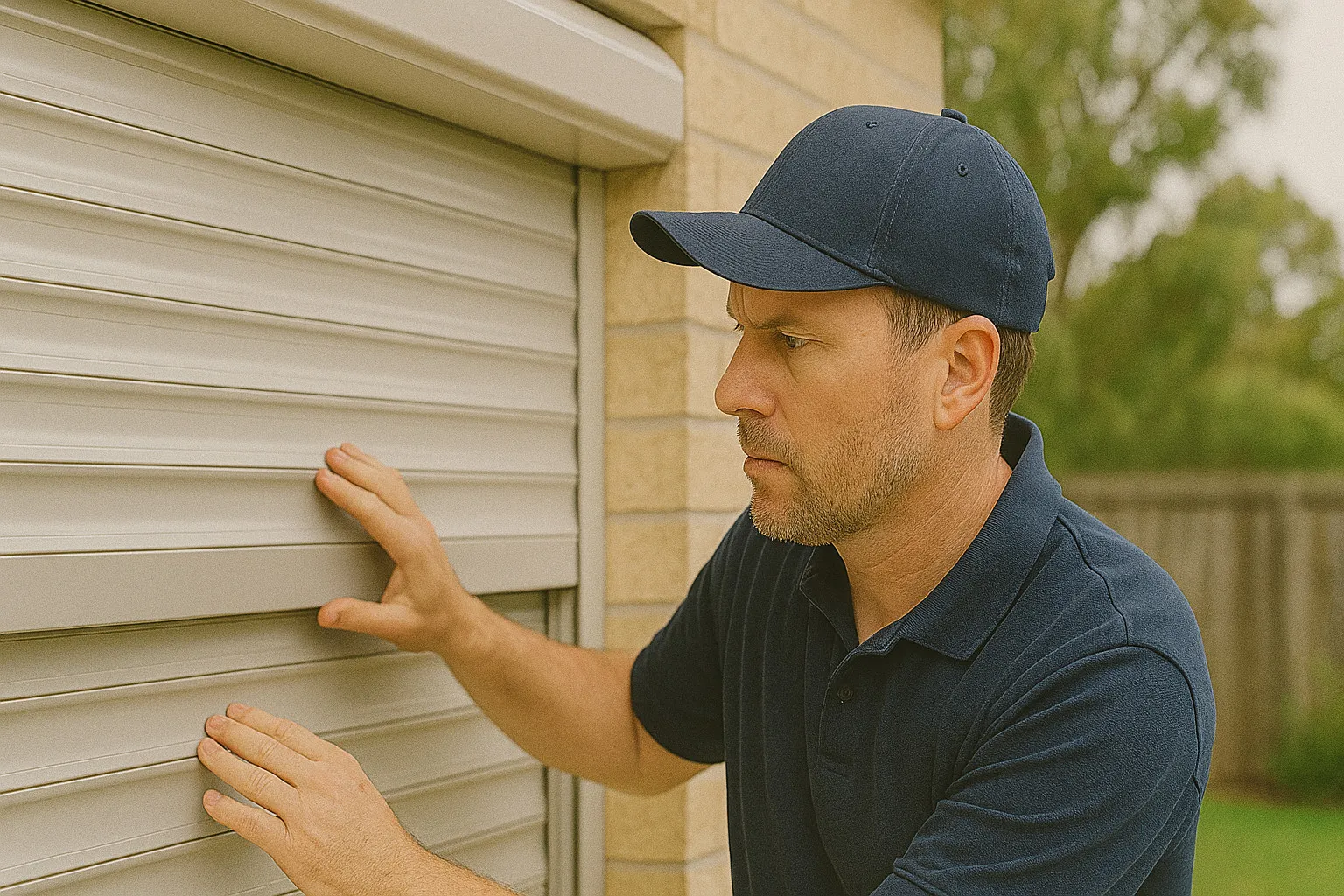
Regular roller shutter safety checks prevent injuries, avoid costly repairs, and keep your shutters working for decades.
Most people install roller shutters and forget about them until something goes wrong. A slat jams halfway down, the motor makes a noise it never used to, or a shutter drops unexpectedly because a spring or bracket has failed.
An annual set of roller shutter safety checks takes about 20 minutes per shutter. That small time investment catches problems early, before they become expensive or dangerous. Here is what to check, how to do it, and when to call in a professional roller shutter repair service.
Roller shutters are heavy, typically between 15 and 40 kg depending on size and material. That weight is held in place by springs, axles, brackets, and guide rails. When any of those components wear out, the shutter can drop, jam, or derail.
Annual inspections matter for four reasons:
The SafeWork NSW guidelines on mechanical equipment apply to commercial roller shutters, but the same principles protect your home. Moving parts need regular inspection.
You can do most of these checks yourself with no tools. Run through this list once a year, ideally at the start of winter when you will be using shutters more often. If your shutters get heavy daily use (shops, garages, warehouses), check every six months instead.
If your roller shutters use cords, chains, or straps, check that they cannot form a loop longer than 220 mm below 1,600 mm from the floor. According to the ACCC, one to two children die each year in Australia from cord and chain strangulation on window coverings. Secure all cords with tensioners or cleat hooks, and keep them out of reach of young children.
Cords are only part of the picture. Families with young children also need to check that shutters cannot be operated by small hands and that finger-trap gaps between slats are within safe limits. Childproofing your roller shutters properly involves several additional steps beyond the annual check.
Safety tip: Never put your hands inside the guide rails or near the axle while the shutter is moving. If you hear unusual noises or the shutter feels heavier than normal, stop and contact a qualified technician.
WiFi-connected and app-controlled shutters need a few extra checks each year on top of the standard items above.
After 15+ years of roller shutter repairs across Sydney, the team at Fix My Shutters sees the same issues come up repeatedly. Here are the most common faults and what they usually mean.
Some checks are straightforward. Others require experience and tools. This table shows what you can safely handle yourself and what needs a technician.
| Check | DIY | Professional |
|---|---|---|
| Visual inspection of slats, rails, bottom bar | Yes | Yes |
| Listening for unusual noises | Yes | Yes |
| Lubricating guide rails with silicone spray | Yes | Yes |
| Testing remote controls and wall switches | Yes | Yes |
| Child safety cord and chain check | Yes | Yes |
| Adjusting motor limit switches | No | Yes |
| Replacing or re-tensioning springs | No | Yes |
| Realigning the axle or barrel | No | Yes |
| Replacing damaged slats | No | Yes |
| Electrical fault diagnosis | No | Yes |
| Motor amperage and insulation testing | No | Yes |
The general rule: if it involves springs, the motor, or anything electrical, leave it to a professional. Spring-loaded components store significant energy and can cause serious injury if handled incorrectly.
Even if your annual DIY check turns up nothing obvious, a professional inspection every two to three years is a good idea. A technician can spot wear patterns you would miss and catch problems before they cause a breakdown.
Book a professional check immediately if you notice any of these:
A proper professional inspection goes beyond what you can check visually. It typically includes:
Fix My Shutters offers fast response across Sydney, including Parramatta, Penrith, and surrounding areas. All inspections come with a clear quote before any work starts.
You do not need to wait for your annual inspection to keep shutters in good shape. A few simple habits go a long way.
These habits take less than five minutes per shutter and significantly reduce the chance of an unexpected failure.
Coastal properties in Sydney cop extra punishment from salt air, which accelerates corrosion on metal components. If you live near the coast, consider doing these maintenance tasks quarterly rather than every six months.
Roller shutters installed in Australia should comply with Standards Australia requirements. The key standards include:
Older shutters installed before these standards may lack modern safety features like auto-reverse sensors. If your shutters are more than 10 years old, a professional safety and security assessment can identify whether upgrades are needed.
Did you know? The National Construction Code requires roller shutters on bushfire-prone properties to meet specific BAL (Bushfire Attack Level) ratings. If you are in a bushfire zone, check that your shutters are rated appropriately.
Annual roller shutter safety checks are straightforward and take minimal time. Here is the short version:
If your shutters need attention, Fix My Shutters provides free assessments with competitive pricing and 15+ years of experience across Sydney. Get in touch to book a time that suits you.
Whether it is a quick fix like fixing a noisy roller shutter or a full motor replacement, getting it sorted early saves money and keeps your home secure.
Many of the issues covered in this guide can be fixed at home if you have the right tools and a bit of patience. But if the problem is beyond a quick DIY repair, or you would rather have it done properly the first time, Fix My Shutters has experienced repairers ready to help. With 15+ years of experience and same-day emergency service, we have fixed every type of roller shutter problem across the city.
Whether you are in Macarthur, Orchard Hills, Kemps Creek, Blacktown, Liverpool or Penrith, we can usually have a technician on site within 24 hours. Visit our Sydney roller shutter repair page for full details on the suburbs we service, or contact us directly for a quote.
At minimum, once a year. If your shutters get heavy daily use (such as a garage or shopfront), check every six months. Coastal properties should also inspect more frequently because salt air accelerates corrosion on metal components.
Yes, most visual and operational checks require no tools and take about 20 minutes per shutter. However, anything involving springs, motors, electrical components, or internal mechanisms should be left to a qualified technician for safety reasons.
The main standards are AS/NZS 4505:2012 (performance and testing for large door assemblies) and AS 5039-2008 (safety requirements for powered doors in residential settings). The National Construction Code also sets requirements for shutters on properties in bushfire-prone areas.
It depends on your policy, but some home insurance providers require proof of regular maintenance. A shutter that fails due to neglected maintenance may not be covered. Keeping a maintenance log strengthens any claim you need to make.
In most cases, yes. Most Australian roller shutter manufacturers include an annual servicing requirement in their warranty terms. Skipping that maintenance can void your coverage right when you need it most.
A professional inspection typically takes 30 to 45 minutes per shutter. This includes a full mechanical and electrical assessment, lubrication, limit switch calibration, and a written condition report.
A thorough report should grade each component (curtain, guide rails, springs, motor, controls, safety features), note any wear or damage found, and list recommended repairs with priority ratings. Ask for this in writing so you have a record for warranty and insurance purposes.
Yes. Salt air accelerates corrosion on metal components, so coastal properties need more frequent inspections. Check for rust and corrosion quarterly rather than annually, and apply silicone spray to guide rails every three months instead of every six.
A jammed or malfunctioning shutter can block an exit route. Under AS 5039-2008, powered shutters in residential settings must have a working manual override to allow escape. Test the manual override during every annual check to make sure it works when you need it.
If your shutters are over 15 years old, have structural rust (not just surface corrosion), need frequent repairs, or lack modern safety features like auto-reverse sensors, replacement is usually more cost-effective. A professional assessment can help you decide whether to repair or replace your roller shutter.
A well-maintained roller shutter typically lasts 15 to 25 years. Motors tend to wear out sooner, often around the 10 to 15 year mark depending on how often the shutter is used. Annual safety checks and proper lubrication are the biggest factors in reaching the upper end of that range.
It depends on whether the shutters are common property or lot property. If they form part of the building facade and were installed by the developer, the owners corporation usually manages maintenance. If an individual owner added them to their unit, that owner is responsible. Check your strata by-laws or ask your strata manager. A written inspection report after each annual check helps resolve disputes about who pays for repairs.
Related guides: How to Repair Damaged Roller Shutter Tracks · 7 Roller Shutter Maintenance Mistakes to Avoid
