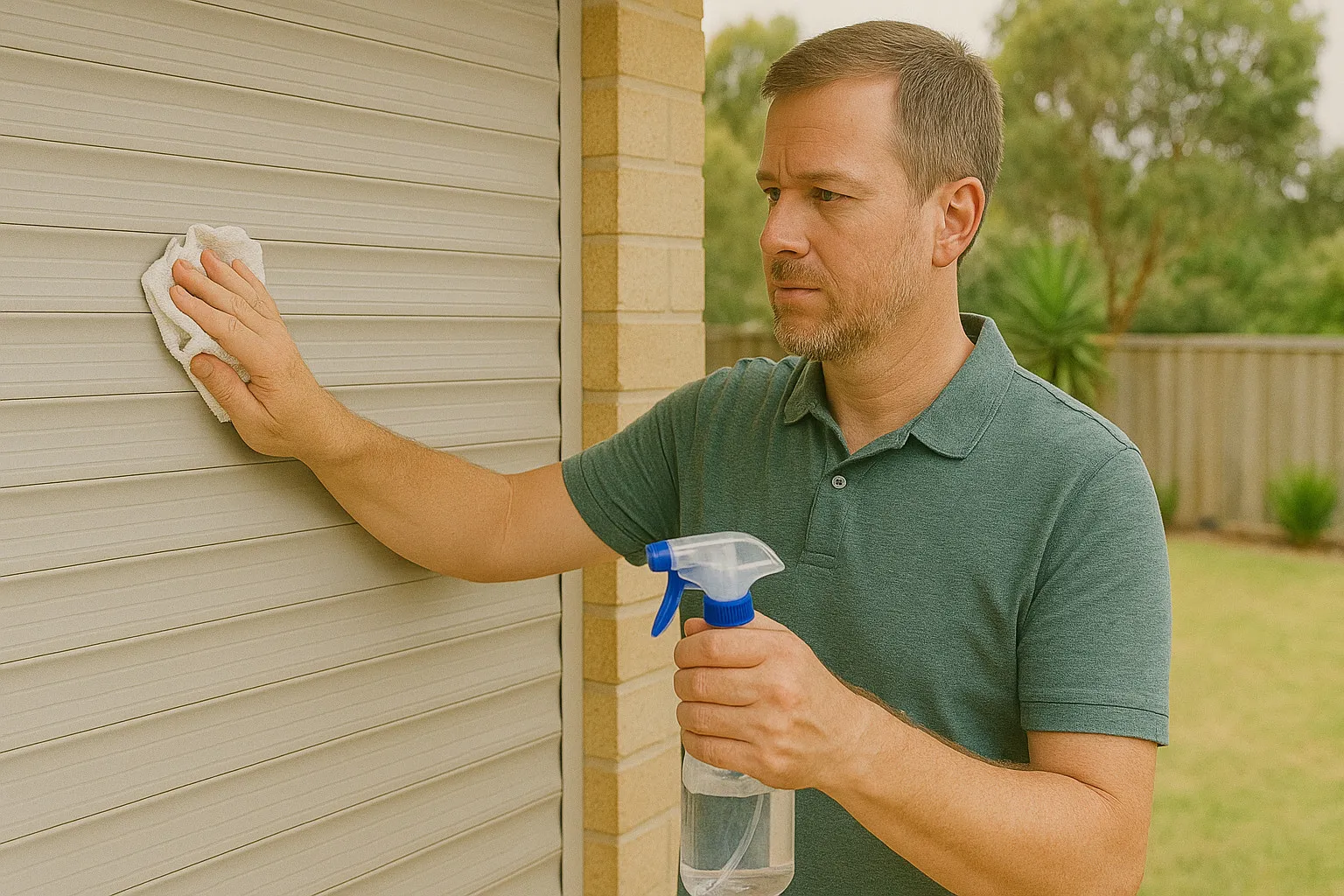
Poor roller shutter maintenance costs Sydney property owners hundreds of dollars each year in avoidable repairs.
Roller shutters are built to last. With the right care, a quality shutter system can run smoothly for 15 to 20 years.
But most property owners skip basic upkeep or, worse, do things that actively cause damage without realising it.
At Fix My Shutters, we have repaired thousands of shutters across Sydney over the past 15 years. The same handful of maintenance mistakes come up again and again. Here are the seven we see most often and what you should do instead.
Dirt, salt air, and debris build up inside shutter tracks faster than most people expect. In coastal suburbs like North Sydney and Manly, salt residue alone can corrode aluminium components within months if left unchecked.
The friction from built-up grime forces the motor to work harder on every cycle. Over time, this shortens motor life and warps the guide rails and tracks.
While you are cleaning, inspect the slats for dents or cracks, check the straps and webbing for fraying, and look for bent or misaligned slats that could jam during operation. Catching these early prevents bigger problems down the track.
Wrong lubricant choice is one of the most common roller shutter maintenance errors we fix. Property owners reach for WD-40 or household oil, thinking any lubricant will do.
It will not. Petroleum-based sprays attract dust and form a sticky residue that gums up tracks, springs, and motor components.
| Lubricant Type | Suitable for Roller Shutters? | Why |
|---|---|---|
| Dry silicone spray | Yes | Does not attract dust, dries clean, safe on plastic and metal |
| WD-40 | No | Petroleum-based, attracts grime, breaks down plastics over time |
| Household cooking oil | No | Goes rancid, attracts insects, creates sticky buildup |
| White lithium grease | Sometimes | Good for metal-on-metal contact points only, not for tracks |
| Graphite powder | No | Messy, stains surfaces, not ideal for vertical tracks |
Stick with a dry silicone spray. Apply it to the guide rails and any moving joints twice a year, or after cleaning. The CHOICE product review site has useful guidance on selecting lubricants for home hardware.
When a shutter jams, the instinct is to pull harder. This is the single fastest way to turn a minor issue into an expensive one.
Forcing a stuck shutter can snap slats, strip the winding mechanism, or burn out the motor entirely.
Important: If your roller shutter is stuck or jammed, stop using it immediately. Do not try to force it from either direction.
A jammed shutter usually means a slat has come out of the guide rail, the spring tension needs adjusting, or a foreign object is lodged in the track. All three require a trained technician to resolve safely.
Roller shutters should operate quietly. A well-maintained shutter produces a low, even hum.
If yours is grinding, screeching, rattling, or clicking, something is wrong. The noise will not go away on its own, and waiting only makes the repair more expensive.
Different sounds point to different problems:
Loose bearing plates and worn end caps also cause vibration and noise that worsens with each cycle. These small components take real punishment and are easy to overlook during a casual inspection.
Early intervention is almost always cheaper. A grinding noise might cost $150 to fix today. Leave it six months and you could be looking at a full motor replacement north of $500.
If you are noticing multiple warning signs that your roller shutter motor needs attention, do not wait.
Many property owners leave their shutters halfway open for ventilation or light. This seems harmless but causes real problems over time.
A partially raised shutter puts uneven load on the winding mechanism and the spring barrel. The exposed slats sitting at mid-height also collect more dirt and are far more vulnerable to wind damage, particularly during Sydney's storm season between October and March.
The NSW Fair Trading website has general advice on maintaining external fixtures and your rights regarding tradesperson warranties.
Online tutorials make motor replacements and spring adjustments look straightforward. They are not.
Roller shutter springs are under high tension, and a spring that slips during adjustment can cause serious injury. Motor wiring done incorrectly creates fire and electrical hazards. The SafeWork NSW guidelines on working with tensioned components apply here.
Incorrect DIY work also risks voiding your manufacturer warranty. Most warranties require that repairs are carried out by a qualified technician using approved parts. Use the wrong lubricant, fit the wrong motor, or adjust the springs yourself, and the manufacturer can decline a future claim.
This is also one of the reasons DIY roller shutter repairs often cost more than calling a professional. For commercial installations, Australian Standard AS/NZS 4505 sets compliance requirements for roller shutters and garage doors. In NSW, specific licensing requirements apply to roller shutter repair work, and skipping professional servicing on a commercial shutter can create legal liability if something goes wrong.
Safety warning: Roller shutter springs store significant energy under tension. Adjusting or replacing springs without the correct tools and training is dangerous.
In NSW, electrical work on motorised shutters must be carried out by a licensed electrician or qualified shutter technician. Always call a professional for motor and spring work.
Basic cleaning and lubrication are fine to do yourself. Anything involving the motor, springs, winding barrel, or electrical components should be left to someone with the right experience and tools.
The team at Fix My Shutters handles these repairs across all Sydney suburbs, including areas like Castle Hill and the Hills District.
This is the biggest mistake of all, and it ties every other point together. Most shutter problems start small.
A bit of noise here. A slight hesitation there. Property owners put off getting it looked at because the shutter still works.
By the time they call, the original $100 fix has become a $600 repair.
A simple annual roller shutter service catches problems early and keeps your shutters running for years longer than they otherwise would. A well-maintained roller shutter can last 15 to 20 years or more, but only if problems are addressed before they cascade. Think of it the same way you think about servicing your car.
A quick reference for keeping your roller shutters in good shape year-round.
| Frequency | Task |
|---|---|
| Monthly | Clear debris from tracks and base rail. Check for visible damage to slats. |
| Every 8 to 12 weeks | Hose down the curtain and tracks. Wipe slats with warm soapy water. |
| Every 6 months | Apply dry silicone spray to guide rails and moving joints. Inspect end caps and locking mechanisms. |
| Annually | Book a professional service. Check motor operation, spring tension, bearings, and electrical connections. |
| After storms | Inspect for wind damage, bent slats, and debris in guide rails before operating. |
Properties near the coast, busy roads, or construction zones should clean more frequently. If you are unsure when your shutters were last professionally serviced, book an inspection to establish a baseline.
Book a professional service at least once a year. Between services, clean the slats and tracks every 8 to 12 weeks and apply dry silicone spray to the guide rails every six months.
Properties near the coast or busy roads should clean more frequently due to salt air and dust buildup.
No. WD-40 is petroleum-based and attracts dust, forming a sticky residue that clogs tracks and damages components over time. Use a dry silicone spray instead, which lubricates without attracting grime and is safe on both metal and plastic parts.
The most common causes are debris in the guide tracks, a slat that has popped out of alignment, incorrect spring tension, or a worn motor. Never force a jammed shutter open or closed as this almost always makes the problem worse.
Warning signs include the shutter moving slower than usual, stopping partway through a cycle, making a clicking or humming noise without moving, or only working intermittently. If you notice any of these, have the motor inspected before it fails completely.
It can. Most manufacturer warranties require evidence of regular upkeep. If a component fails and the manufacturer finds signs of neglected maintenance such as corroded tracks, seized bearings, or dried-out seals, they may decline the warranty claim.
Keep a record of your cleaning and servicing schedule as proof of regular care.
A standard annual service in Sydney typically costs between $80 and $150 per shutter, depending on the type and accessibility. This is far cheaper than the emergency repairs that result from skipped maintenance, which can run from $300 to over $800.
Yes. While cleaning and lubricating, check that the locking mechanism engages fully, the bottom rail sits flush against the sill, and there are no gaps between the curtain and the guide rails. A roller shutter that does not close securely is both a maintenance issue and a security risk.
A quality aluminium roller shutter typically lasts 15 to 25 years with regular maintenance. Motors tend to need replacement sooner, usually between 7 and 15 years depending on usage and whether the shutter is in a coastal environment where salt accelerates wear.
Look for visible dents, cracks, warping, or slats that no longer sit flat against each other when closed. Damaged slats let in light, water, and insects, and they increase strain on the motor as the curtain no longer rolls evenly. Replacing individual slats is straightforward for a technician and much cheaper than waiting until the whole curtain needs replacing.
Avoid pressure washers on roller shutters. High-pressure water can force moisture into the motor housing, damage seals, and dent thin aluminium slats. A garden hose with moderate pressure and a soft cloth is all you need for routine cleaning.
Stop using it until the cause is identified. Grinding usually means misaligned slats, debris in the tracks, or dry guide rails. Continuing to operate the shutter risks stripping the motor gears or bending the curtain out of the guides, turning a minor repair into a major one.
Roller shutter maintenance does not require much effort or specialist knowledge for the basics. Regular cleaning, the right lubricant, and knowing when to call a professional will prevent the vast majority of breakdowns.
The mistakes listed above account for nearly every avoidable repair call we receive across Sydney.
If your shutters are making noise, getting stuck, or just overdue for a service, get in touch with the team at Fix My Shutters. With over 15 years of experience repairing roller shutters across Sydney, we can diagnose the problem quickly and give you an honest quote.
Many of the issues covered in this guide can be fixed at home if you have the right tools and a bit of patience. If the problem is beyond a quick DIY fix, or you would rather have it done properly the first time, we can help.
Whether you are in Castle Hill, Cherrybrook, Parramatta or Blacktown, we can usually have a technician on site within 24 hours. Visit our Sydney roller shutter repair page for full details on the suburbs we service, or contact us directly for a quote.
Related guides: How to Replace a Broken Roller Shutter End Lock · What Does Roller Shutter Motor Replacement Cost?
